“Hello,” she says so politely. “My name is Hannah and I just ran away from God and his sheep.”
Welcome the pilgrims with a pellet gun and a lava lamp kiss See Hannah cut her finger with a pair of scissors whilst she creates a paper turkey from a paper plate and construction paper the colors of autumn dust See the missiles rain from the sky each tattooed with a patriotic emblem stating “Goodbye… Have a nice day.” See Hannah paste her paper turkey on her bedroom mirror animated and alive it wiggles its plastic bubble eyes, the pupils tremble See Hannah crawl beneath the covers on the eve of holiday glee see her dream of firestorms and bullets and starving on TV See the maestro carve the cooked bird the steam from the flesh rises above the well-adorned table leaves a mist on the golden goblets of blood wine See Hannah stare out the picture window as the chaos of family voices clutter her mind See the soldiers all falling down in a line gassed by children coughing up the poisons as they simply attempt to make paper turkeys with scissors and glue and not a clue from their forefathers how to breathe with peace.
Hannah stares at the church people marching in one by one pale and whiskered faces flushed with trouble crowns of cowboy hats and blindness pouring from their souls and as Hannah passes the begging plate, she spits in it futility running from her mouth the scent of heaven polished in her hair she looks up at Tik Tok Christ and wonders if they’ll nail her up there too Hannah crouches down low and slips out the row whispers to her mum “I have to go to the bathroom …” She breaks out the doors to greet the steely blue sky the wind whipping bone finger treetops curled leaves choking the streets and dancing the semi-truck scatters them like a hurricane as it rumbles right on by and Hannah walked on down the road To the school where they teach the blind children such a huge enormous house of sooty brick and brawl long luscious hills of now dormant grass rolling and rolling on down paths of gray serpentine their way across the landscape and the clouds Hannah climbs over the black iron fence rips her dress on a spike tumbles to a patch of moss and rock She lifts herself up wipes herself off and comes face to face with a blind boy staring at nothing but dark empty space. “Hello,” she says so politely. “My name is Hannah and I just ran away from God and his sheep.” The little blind boy smiles at the sound of her voice Reaches out his hands to touch her Feels the fringes of her dress The softness of her arm right where it comes out of her sleeve. “I’m blind, but I can see you,” he says to her “I’m blind but I can feel you,” he mentions to her And he kisses her on her cold, wind-chapped cheek.
The little blind boy took her down to the boiler room He led the way by touch It was dark and cold and smelled so old Hannah crinkled her nose and coughed “What are we doing here?” she asked “Nothing… Everything is a mystery to me because I’m blind. Just stay close to me.” Hannah found a book tucked beneath a red blanket in the corner. “What is this?” she asked as she stuck the stuff out in front of her. “I don’t know, I can’t see… see… ” and he felt around like a blind boy imitating a blind man lost in the confines of his own darkened theater. “I’ll read to you,” Hannah said. And she led him close to the wall, beneath a slit of window against the ground. And they sat side by side, their backs pressed against the stone of the wall. Hannah flipped pages and read the words aloud. And with a final breath upon the final page, she read: THE END – AND THE MISSILES CAME STREAKING ACROSS THE SKY MAKING THE END A SARCASTIC REALITY.
Hannah stared at the paper turkey pressed against her mirror The dust was falling from her hair The dried blood flaked from her mouth Her once pretty dress torn worse and soiled now She walked out into the hallway Dimly lit and smoky She turned the corner Entered the dining room Saw the pillars of stone bones propped in their chairs Bony fingers clutching the golden goblets of blood A hole in the window Operating a view to the burning scene The head of the blind boy spun like a record amongst the claws of the mangrove cathedrals floating through the world She touched her mouth to feel her breath The eye of the needle had been fed She was alive but the world was dead.
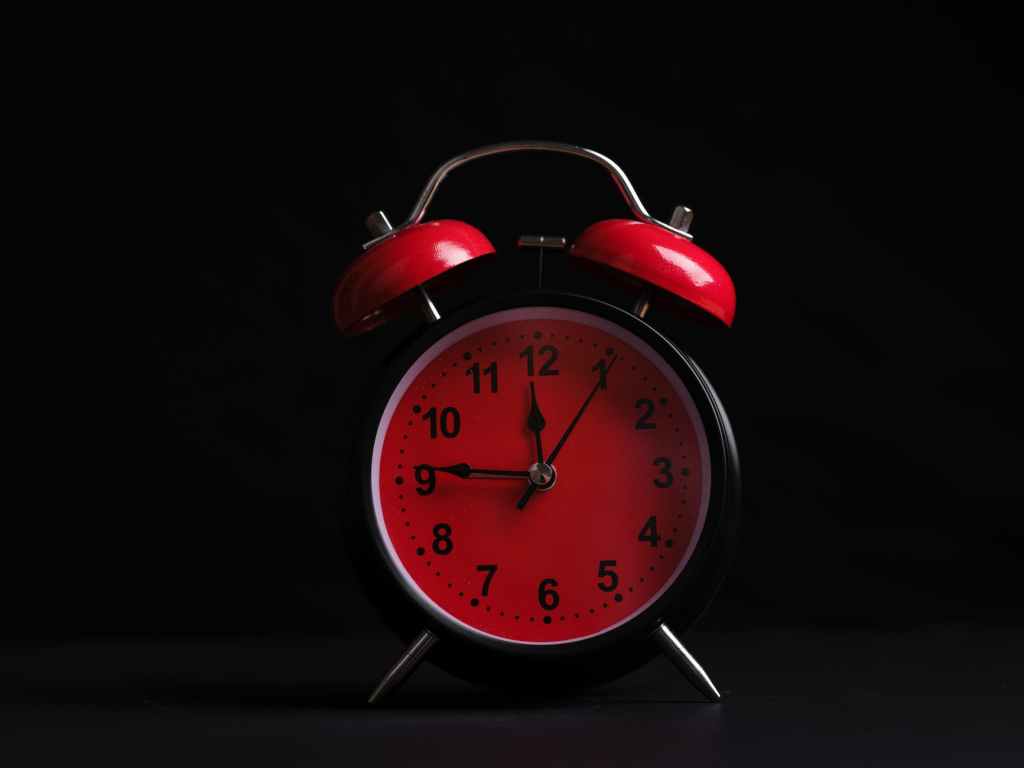
I was lying in a bed and staring at the ceiling, and I was thinking about all the packages of shredded cheese that were accumulating in the refrigerator due to my inability to make a proper check of things before going off to the grocery store. It distressed me greatly and I knew that I had to use them in accordance with their expiration dates or it was possible that some would need to go to the trash barrel. That’s a thought I couldn’t comfortably digest because I am one who hates wastefulness. I was racing the clock of life.
That’s when I looked about the room and noticed there wasn’t an actual clock anywhere. I had no idea what time it was. I looked toward the windows that lined the far side of the room. There was sunlight and blue sky beyond the straight, black vertical lines evenly spaced there. Those were the metal bars designed to keep my madness locked inside so as not to damage the already damaged world.
The walls of the room where I was being kept were a sickly yellowish orange color. Perhaps more akin to the color of a bleached peach. On one of the walls was a large painting of a maniacal-looking man holding a moldy orange in each of his hands. He had a wild and devious grin on his face and his hair was catastrophic, as if he had just stepped into the frame from an earth-shattering windstorm. I must confess; however, the colors went well with the room but the image itself was highly disturbing to me.
I looked up at the ceiling again and that’s when I noticed the pharaohs depicted upon it resembled what could only be described as beings from another world. It was truly unmistakable—the shapes of them, the odd colors of their various skins, their language, their beliefs. It all made sense to me, but then again, perhaps that is why I was here… Because it made no sense to anyone else. I blame the arrogant Earthlings for my captivity.
And recently it has come to me in dreams and half awareness these thoughts: Why are the space aliens visiting us? What are they doing up there? My theory is that they are preparing the people of the world to be taken off the planet. It would be a mighty undertaking by them I imagine… To lift billions of people off the Earth and move them somewhere else. Perhaps they are our true religious saviors, and we are blind to it because we are praying to statues and bearded wizards in the sky. Perhaps the spacemen are the true ones setting up a place for us in the heavens. They are God and the angels.
They look down upon us and see our planet cannot sustain itself. We are destroying it more and more every single day. The mad people ignore the destruction of the environment for that is no real concern to them—for they prefer to hate each other and burn plastic dolls in frivolous, infantile protest.
Perhaps instead of preparing for some war with the aliens via the ridiculous notion of a Space Force, instead of human beings continually being focused on destruction and killing, we should be embracing the presence of these otherworldly beings, welcoming them, preparing ourselves for the final journey to the stars, the resurrection of humanity, the true ascension to the realm of our roots.
Perhaps these extraterrestrials are going through a filtering process with their visitations… What do they do with all the fucking morons? What do they do with all the hateful ambassadors of religion? The bigots, the liars, the frauds, the murderers, the thieves, the utterly ignorant? Let’s leave them behind to burn with the planet they neglected. There is your true judgement day. There is your true rapture. Don’t miss the mothership. Ye mouth this new mantra.
There came a light knocking on the door and then it opened and in came Dr. Milkman. He was dressed in all white as usual. Even his rubber gloves and shoes were white. He was bathed in pure milk, a white-sheeted entity. He wore studious glasses and was losing his hair but styled it as if he just didn’t care what it looked like anymore. His skin was pale. Dr. Milkman held some sort of chart, and he went to the complicated looking machines around me. He checked various screens and connections, pushed some buttons, turned some knobs. He scribbled something on his chart with a silver pen.
Then he spoke to me without even looking at me. “How are you feeling today?”
“I’m a bit worried about something.”
His eyes moved from his chart to my face. He was surprisingly interested. “Oh. What’s that?”
“I’m afraid I bought packages of shredded cheese when I already had shredded cheese in the refrigerator, unopened. So, now I have all this shredded cheese and I feel pressured to use it before it expires. I don’t want to have to throw any of it out. Wasting food is devastating to me. The more I think about it, the more upset I get. I’m feeling very anxious… I feel I need to make a casserole or something, like, right now.”
Dr. Milkman uncharacteristically smiled as he wrote on the chart with his silver pen.
“What are you writing down?”
“Observations,” he answered.
“Do you think this is funny?”
“No. Not at all.”
“Because I’m being serious about all that cheese. Can you give me something? I feel like I’m about to crawl out of my skin.”
Dr. Milkman sighed and placed a reassuring hand on my leg through the white blanket. “Cheese should be the least of your concerns in this world. You’re not well, and so you should focus on getting better, not on an abundance of cheese. The Earth will still spin, and time will march on regardless. I’ll have the nurse bring you a mild sedative.”
“Mild? I don’t need something mild. I need something to make me forget that I exist.”
The doctor’s face turned serious. “You don’t want to exist?”
I looked up at the green-skinned pharaohs for some proper guidance from among the ceiling and the stars. “Sometimes. Isn’t that normal?”
“Not always.”
My focus purposely shifted. “Can I ask you something?”
“Absolutely.”
I motioned with my head. “What’s with the crazy painting of the guy holding the moldy oranges?”
The doctor turned to follow my gaze. “Do you like it?”
“No. It’s odd. And it seems out of place. Don’t the people who run this facility realize a painting like that could be detrimental to a person’s state of mind? We’re already fragile and disturbed. Why not hang a painting of a lighthouse or a peaceful mountain or a glittering spaceship in the sky?”
“No, no. A lighthouse is no good. Lighthouses are creepy. They are spires of loneliness, hollow horns, cold and dark. And mountains? People fall off mountains and die all the time. The man with the oranges is thought-provoking.” Dr. Milkman tapped at his mussed head with a finger. “A painting like that greases the mind. A painting like that is good for you.”
“I have to disagree.”
“And what’s this about glittering spaceships? Have you seen something?”
I gently clawed at my bearded face as I considered what to reveal. “I suppose I’ve been preoccupied with the end of the world. I’ve decided that the extraterrestrials may be our only hope.”
“You’re a believer in UFOs then?” the doctor asked.
“I am. I’ve seen them myself… Five red jewels in the sky above the desert in the blazing American Southwest.”
“That’s quite an extreme division of thought.”
“What’s that?”
“Well, first you were terribly concerned about packages of shredded cheese… And now it’s about aliens and the end of the world.”
“My mind is a broad spectrum. Haven’t you figured that out yet?”
The doctor smiled. “We’re working on it.” He adjusted his glasses and made a move for the door. “It would be good for you to get out of this room occasionally, to be social with the other patients. I highly encourage it.”
I moved my head to look at him. “I don’t care for people much,” I told him. “They’re generally a grave disappointment.”
“Not everyone is a terrible person. Maybe give someone a chance.”
He slipped out the door and I was alone again. I threw my blanket back and crawled out of the bed. My muscles felt stiff. I stretched and walked toward the bank of windows. I grasped the metal bars and looked out. The landscape was rugged and felt African. The dunes of sand were a rusty orange color and those high, shape-shifting mounds receded for miles from the edge of a very dark blue sea. I could smell the salty air. I saw miniature people slowly walking along the shore and I envied their freedom. I tried to bend the bars apart, but it was useless. I should have known that. There must be some other way to escape, I thought.
I went to the door and out into the dimly lit hallway. I scuttled along the shining tile and was soon swallowed up by the smells and the moans and often the screams. I heard the television loudly playing in the dayroom and stood outside looking in. There was a small group of other patients gathered around watching the horrible news. A young woman turned her head and looked at me in a crazy way. Then she quickly looked away as if I was some terrible being.
I walked the hallways until I could take no more and then went back to my room and waited for my dinner to arrive. I ate and then rested until darkness began to descend. I went back to the windows and looked out. There the universe began to come to life against a bruise-colored backdrop, the hollow moon a burgeoning beacon. I felt their presence on the dark side. I felt their presence in the fluttering orbs of gold and green. I suddenly and unexplainably turned to look at the painting of the maniacal man with the oranges. For some reason he brightened in the growing darkness. I stepped closer and looked into his crazy eyes. They were now sockets filled with swirling stars and then I heard him very clearly speak in a warbled, mechanical voice. He said, “Come inside. Come inside.”
At first, I stepped back, but then I reached forward with my hand, and without any resistance it went right into the canvas and through it. I quickly retracted it, and it was covered in wet paint and space dust, a mingling dripping of stars and the colors in the strange portrait.
The voice came again. “Reach in a little further, and then further still. Come all the way through and the true Heaven will find you.”
I steadied myself with my hands on the bottom edge of the frame and pushed my head through. There was a calming wind, a rush of colors and spirals and primordial visages. I took a deep breath and there was no fear.
“All the way to the end,” the voice said. “We are waiting.”
I leapt forward into the portal with all my strength. A sudden soft dark and quiet met me on the other side. I looked up and the universe was there in all its expanding strength and perfection. I turned to look back through the portal and it was now like a clear window, and through it I saw my former room of captivity completely void of me.
I saw Dr. Milkman suddenly rush into the room and frantically search for me. He went to the windows and looked down. Then he turned and came to what was the maniacal painting for him, the window for me. He tried to peer through it as if he knew, but he could not see me. He was speaking but I couldn’t understand the words. His language was now suddenly unimaginable to me. I stepped away and turned. The ship there was lit up like Las Vegas, yet meditative like a monk. I moved toward the light, the welcoming light we all crave at the end, and I stepped aboard the shimmering cloud and into this gesture of graceful, everlasting ascension.
In the serpentine maw of a sun fall begging the good ropes of a life gone wrong fray and bow to snap, photo frames turned down on a table, a guilt like fire, someone stomping in the hallway, Jakob Moo with a knife tip pressed against his throat, a desperate temptation in a flow to darkness.
It had been a long walk in the throes of grayness, a lifetime of derailment. A vessel once made in the flesh now torn asunder in this sea of blood. In a child’s wake left aborted and adorned, sliced like meat in a butcher’s spinning silver moon, the ornaments packed and scattered, memories now too thick to swallow.
Amplified heartbeats. The clicking of an old typewriter on the other side of the paper-thin walls. Jakob Moo drops the knife, and it clatters against the wooden floor. He opens the door to Hades, peers out and searches for foundation.
He steps to the window frame and looks down upon the hive of the city. It’s a clotted yellow smear of digestion and expulsion. Automobiles crawl through the silver light of a bruise. The people parade in lives of pain. There is too much detachment, distraction, disintegration. Love flies like a headwind, branches break, bones snap. Coffee cups rattle in the coming of the great universal God on high. The sun leaks, the stars spin, Jakob Moo tries to breathe. He realizes he has landed in the wrong life.
He whispers to the history keepers and their logbooks of strife. “This should have never been. I should have never been.” The sun is cradled in a ghastly prediction, the hurt of Los Angeles in brick and wire. “You can make this anything.”
He opens the window and puts his body out. He waits for time to pass over him. Death rays spray like spores and sprockets. A fluorescent angel on a silver disc, a galactic gravestone from space. Her eyes are empty white places, her palms littered with stigmata. With emotionless bravado he frays, steps back, gets plain white paper from an incandescent desk. He sits to color with a lone black crayon, forceful sweeps across the blank slate, erosions of a pent-up anger with no explanation. The angel whispers some ethereal epitome, curses his life, his soul. She spits stars and then vanishes into them.
Jakob Moo pins his nonsensical drawing to the wall. He steps back to study it with a sideward tilt of his head. He grunts his disappointment. As it always is. The summary of a derailed life, pitch black misgivings, missteps, mistrials. He now longs for an altered state of being, to become turbo invisible, a nonchalant demigod feasting on peaches of wrath. He steps to the mirror at the beaten armoire. The image there is paladin, wrecked, a titan monarch reflected. The gas of the city turns blue outside. And his guts are like a willow, turning inside out in the wind that never fades.
He goes to the door, but it does not open or close, it is merely shut, silent in its nailed brooding, dusk falls like an emperor, the lights of the city blossom like a bomb. He collapses in a corner, nightshade calling for an endless picture show of dreams, disenchantment directing.
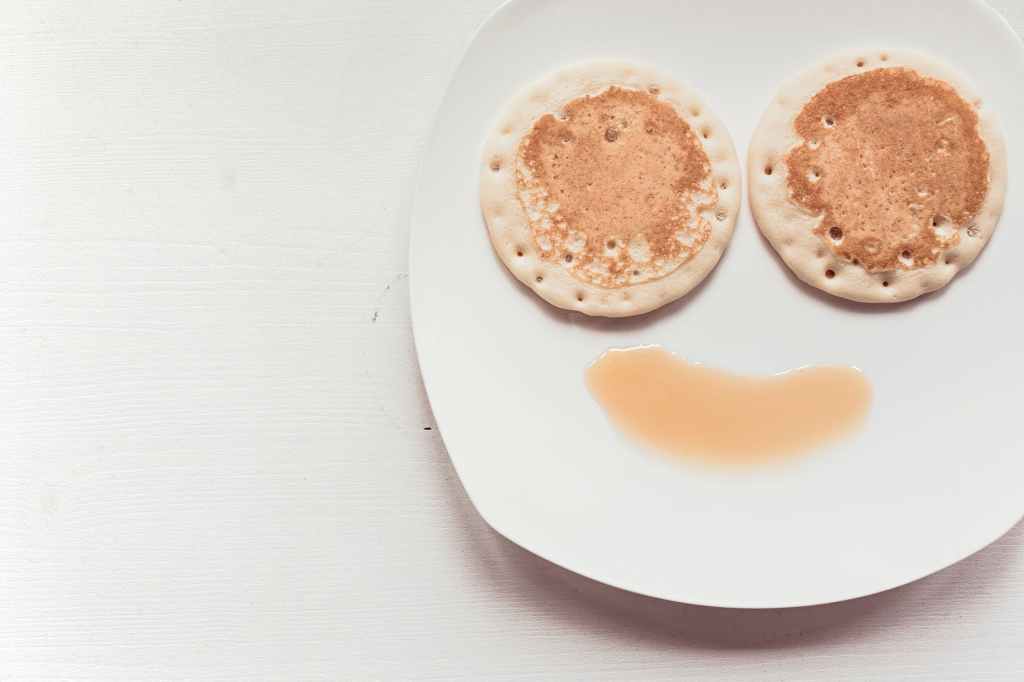
In the warbled dawn of a coming hot summer day the crypto man wiles away in a labyrinth of enigma. The staircase to the pancake house was long and winding. He burst through and there were the smells of syrup and broiling butter. It was the essence of Isis, the corrugated dreams of a running kite, and he took a seat in a silver, translucent booth. He pawed the menu open, read a few lines, set it aside.
The waitress ghost floated over. She was blue and beautiful. He looked into the mirror of the street, a cacophony of visions, dreams and illusions. Lamp shades littered like tattered doves, the human motion beating against the breath of God.
He wanted to know if magic was on the menu. He wanted to know if she could pull a short stack out of a top hat. She laughed and bent, scribbled on her periwinkle pad.
“And a pot of coffee, a cradle of sweetener, and one of those little silver pitchers of cream.”
His voice was like raw diamonds, a gallant sweep of the clock across highway sands.
Someone slipped a couple of coins into the 4-dimensional jukebox and the song Free Falling by Tom Petty came spilling out. He suddenly recalled the stain of polluted mountains, elaborate shopping malls, the smell of man in the ocean.
“This one always gets me right in the guts,” he said to her. “Memories can be like knives.”
Her electric lips were stretched by a mile-wide smile. “You must be 110 years old,” she said. “That song is so old.”
“One-hundred and eleven,” he replied.
“You keep yourself plugged in nice and tight every night?”
“I dream of electric camels and wide expanses of desert… How about you? What unfolds in your dreams?”
Her eyes popped skyward as she thought about it. “Despite taking my sleepers, I dream of mountains made of pancakes and syrup is lava and a ball of butter is a golden Buddha.” She frowned. “I suppose it’s a hazard of working in this place.”
He looked around the place. It hummed of life, or at least a comforting pause within it. “I like it here. I enjoy the clinking of cups and plates and the blended din of voices.”
“Well,” she laughed. “That makes one of you. It’s easy for you to say. You can just get up and walk out of here and enjoy the rest of your day out in the beautiful world. I’m stuck like stink on a skunk.”
“Why don’t you just duck out. We can go to the library and read.”
“Library? Read? Is that your idea of fun?”
“Yes.”
Someone tapped a little silver bell. “Sheila! Order up.”
“I’d like to, but I can’t. Life calls.” She floated away, did her rounds of drudgery, and then returned with his coffee and magical short stack as he requested. She set the things down in a calm and orderly fashion. Her visage was of embers. She walked away eternal, and he sat alone and ate and drank, a forceful empty ache rising somehow. He tried to wish it away, but his wishes rarely came true.
Cherry blossoms blew up in his face, a memory bloom, rain, a long walkway left polished by the wetness from the sky. He looked up at the white obelisk, the markings from space. His face tilted toward the window and he suddenly longed to go homeward.
It was a blue-gray evening dipped in pink and orange when Simon Waterbones drove his car into a KFC restaurant in downtown Amarillo, Texas.
There was a mess of broken glass, toppled tables, spilled chicken and drinks.
He stepped out into a cloud of dust, coughed, brushed himself off. “Shit. Sorry about that.”
An old woman was on the tiled floor covered in gravy and mashed potatoes. She was twitching and moaning.
A man got on his phone and called the police. He pointed a stern finger at Simon. “You’ll get life in prison for this!” he shouted.
Simon got scared and ran. His feet popped and flopped upon the grimy walkways of a dim downtown.
When he couldn’t run anymore, he stopped to catch his breath.
He was in a lowly neighborhood of beat down houses from another time. He heard the wail of police sirens in the distance. He ran up some cement steps and onto the porch of a smeared green abode. He slammed his way through the front door and skidded into a dining room. There was a table with people sitting around it. A man slammed his fist down and dishes rattled. His bushy moustache moved when he spoke. “Just what in the hell is the meaning of this!?” He stood up and threatened Simon with a butter knife. “Get out of here!”
A young girl turned her head and looked at Simon. “Please don’t kill us,” she said.
Simon ran back out of the house. The man with the butter knife chased after him. “I’ll stick you if you come around here again!” He threw the knife like a circus performer and it barely missed Simon’s face, then clinked away on the walkway. Simon bolted toward the tall buildings rising from the guts of Amarillo. His plan was to go to the newspaper building where he worked.
He rode the elevator to the second floor and went into the newsroom. His cumbersome and inept boss, Christine Divine, scowled at him. “Your lunch break is an hour, not an hour and a half. Do you want us to miss deadline?”
Simon took a seat at his desk and illuminated his computer screen with a simple touch of the spacebar. “Sorry. I had car trouble and had to walk back.”
Christine scoffed. “I’m surprised another relative hasn’t died.”
“Are you calling me a liar?”
“Yes. I am.”
“So what if I lied? If this place wasn’t so God damn awful, I wouldn’t mind coming to work. But it makes me sick every single day, but I can’t do anything about it because of money. Fucking money. I have to live this shitty life because of money. I have to crawl in here every single day miserable out of my mind because this society we live in doesn’t just allow people to be what they were truly meant to be. So, yes Christine, I lied about my uncle dying, I lied about my cousin dying because I simply can’t stand to be here!”
“Then maybe you should find somewhere else to work.”
“If only I could.”
Simon opened InDesign on his computer and went to work laying out some newspaper pages. He didn’t say another word to anyone for a long time. Most of his co-workers hated him. Simon often called out with ridiculous excuses, and it was his co-workers who often suffered for it. “Fuck them,” he thought as he thought about it.
He looked up from his work and saw one of the reporters talking to Christine. Simon overheard the following words: KFC. Car. Crash. Injuries. Damage. Suspect fled. Home invasion. Front page story.
“That’s me,” he whispered to himself. “I’m trapped. I’m dead.”
He looked up and big Christine Divine was standing over him. “We need to slot a new story for the front page. Some lunatic crashed his car into KFC and ran off. Make a spot for it. It’s on its way.”
Simon sharply saluted her as if he was in the military. “Yes, mam.”
She rolled her eyes at him and walked away.
Forty-seven minutes later he was putting the finishing touches on his own story. He printed the proofs and passed them out to the other copy editors. None of them were his friends so maybe they wouldn’t notice that the car in the photo was his. No. They couldn’t. It was covered in dust and debris. But then he realized the cops would soon track him down. All they had to do was run the plates, look in the glovebox. There it all was in black and white: Simon Waterbones, 2117 Virginia Ave., Apt. 4, Amarillo, TX. Knock, knock.
Simon went to the restroom and threw up. He had to escape but there was no escape. How and where to? He knew the only choice he had was to turn himself in. There was nothing else he could do. His life was fucked.
“I just wanted some god dam chicken and coleslaw,” he mumbled to himself inside the raspberry-colored stall of the men’s room. “I just wanted to have my dinner… And now my entire life is ruined because I suck at being a human being. I suck at being alive. I’m a walking disaster. This shit crawling around in my head is killing me.” He slammed a fist against the cold tiled wall. “Why was I even born?”
Once his shift was over, Simon walked to a bus stop and waited. He shakily smoked a cigarette. The bus approached, it stopped and drew a mechanical breath. The ride to his neighborhood was dim and lonely. The city outside the window was moving points of erratic lights, traffic elongated like stretched out metal taffy painted like a psychedelic circus, a moon up high looked down upon him and laughed. He wished the bus would just keep going, break the barrier of the city limits and just go. “Drop me in the middle of Kansas, for Christ’s sake,” he mumbled to himself. “I don’t care. I’ll hide in a hotel elevator. I’ll chew on ice. I’ll try to breathe.”
He sat still and listened to the engine of the bus. It stopped and went. He could hear the clicking sound of the turn signal. The driver spoke over the radio to someone. Simon thought he heard him say: “Yeah, I got him.”
On Western Avenue, Simon reached up and tugged on the wire that signaled the driver to let him off at the next stop. The bus crawled to the curb. Simon got up and walked toward the exit. “Are you sure you want to get off here?” the driver asked.
Simon struggled to smile. “I’m not sure of anything anymore,” he said, and he stepped off the bus and into a sea of run down neon and city dirt. He watched as the bus pulled away with a polluted hiss. The engine growled. The machine soon disappeared.
Simon turned and looked at the orange and white auto parts store. He looked up and down the entire avenue and it was nothing but beat down stores dressed in electric signage. It was one long eternal strip mall.
He saw a burger place and went in. He ate a lonely meal at a plastic table. He sipped on a cold soda. He looked out the window and in it was reflected a dead-end life. His own face was distorted. His hair looked stupid. His eyes ached. He considered snuffing it as a worthy alternative. Life just hurt too God damn much.
He pushed his tray of food away and rested his head down on his crossed arms. He closed his eyes and listened to the garbage music overhead. There was a tussle of some voices. Customers came and went. Someone tapped him on the shoulder. His nametag said: MANAGER. “Hey. You can’t sleep in here.”
Simon blinked his eyes and got up. He dumped his tray of trash and walked back out onto the strip of meaningless shit. He breathed the musty air and started walking toward home.
The next morning there was a knock at the door. Two cops had come to arrest him. Simon wept as they led him to the patrol car and stuffed him into the back seat. The ride was long and painful. He looked out at the swirling city, and it spat back at him. He was full of regrets; they were spilling over. “Am I going to do time for this?” he asked the cops up front.
“That’s up to the judge,” one of them answered. “But you nearly killed people, so I figure you’ll get something.” They laughed at him.
“I didn’t mean to,” Simon pleaded. “I was just so upset about life. I lost control. I’m always losing control.”
“Not our problem, buddy,” the other cop said. “Now, why don’t you just shut up.”
Simon Waterbones was found to be a menace to society just as society was a menace to him. He sat in a prison cell and scribbled in a notebook with a half-eaten pencil. No one ever came to visit. He had no friends among the other inmates. They all hated him without even knowing him. It’s because he was weak and as fragile as glass. It’s because he was different. The world didn’t fit him, and he didn’t fit the world. He had been born in the wrong place and time. He sighed and looked up at a concrete wall painted death gray. He set his notebook aside and laid down on his bunk. He closed his eyes and tried to dream of flying.
Mother Melba Gould carried a tray supporting a pot of hot java, clean cups, cream and sugar. She carefully set it down on the coffee table in the front room. Steel followed behind her holding a pie. Dutch apple. There was also a carton of vanilla ice cream, a scooper, glass bowls.
“Pastor Stikk,” Melba said. “Would you like to say another prayer before we enjoy our dessert?”
He stood among them and smiled. “Yes, of course.” He cleared his throat and looked up at the ceiling for a moment. He mumbled something inaudible and sighed. “But I’ve been moved by the Holy Spirit to make a confession to you all.” He looked over at Carrie. “Some serious love has been happening in this room. It happened while you two were in the kitchen. I’m sorry, Steel, Melba. This is all too powerful for me to hold in any longer. I love Carrie. I’ve loved Carrie for a very long time.” He glared at Steel. “Long before you set foot in Berlin, Wyoming, young man.”
Steel took his time pouring himself a cup of coffee. He worked in the cream and sugar, stirred it with a silver spoon. “So, you’re a thief?” he said. “You’re going to steal another man’s woman just like that? That’s real Christian of you.”
“I can’t steal something that already belongs to me,” Pastor Stikk snapped.
Carrie broke in. “Wait a minute… Don’t I have a say in this? I’m not some cow to barter over.”
Someone in the clouds snickered.
“I believe your moans of ecstasy earlier said enough, Carrie,” the pastor pointed out.
“Ecstasy!?” Melba cried out. “What kind of ecstasy has been going on in here? Do you not see the pictures of our beloved Jesus hanging on the walls? You did this in front of his eyes?”
Pastor Craig Stikk pumped the brakes at her with his hands. “Hold on, Melba. The Lord spoke to me. He told me that Carrie would be mine. Was it a few moments of heavy lust? Yes, it was. But it was lust blessed by God.”
“Lust?” Steel said.
The pastor laid foul eyes on him. “I ventured into Carrie’s private area, if you must know. With my face. It was wonderous.”
Steel shot up from his seat, nearly tossing his cup of coffee to the floor. “You’re nothing but a creepy pervert. How dare you molest my girlfriend! I ought to knock your block off and kick it down the street like a soccer ball.”
Mother Melba put a hand to her forehead and closed her eyes. “Enough! she said, shaking her face. “I’ve heard enough. This day has become twisted into something I never dreamed of. Such talk.” She turned to look up at Steel. “But then again… I have a confession as well.”
Steel’s eyes grew wide. “You don’t have to say anything, Ms. Gould.”
Carrie looked over at Steel. “What is she talking about? What’s going on?”
Steel took a deep breath. “As long as we are all spilling our sinful and lustful guts… I kissed your mother, Carrie. In the kitchen. Twice.”
“What!?”
Pasator Stikk chuckled. “This is great. Open, lustful communication. Please, tell us more, Steel… Because there is always more.”
Steel paused for a moment. Then he looked around at them all. “I touched her between the legs, too.”
“Mother!” Carrie cried out. “How could you allow it?”
“How could I? How could you!?” Melba snipped. “Poor, poor, Steel. You were cheating on him… And with a man of God no less!”
“And tally ho… He was cheating on me!”
Pastor Stikk put his hands in the air to settle the voices. “Please, friends. None of this is cheating. We are merely putting the puzzle pieces of love in the proper places. We fit better like this. This is God’s will. Now, watch.” He went over to Carrie and forced a kiss upon her mouth. “There. Let that linger for a moment. Okay, Steel. Now you give her a whack.”
“What?”
“Just do it. Kiss her.”
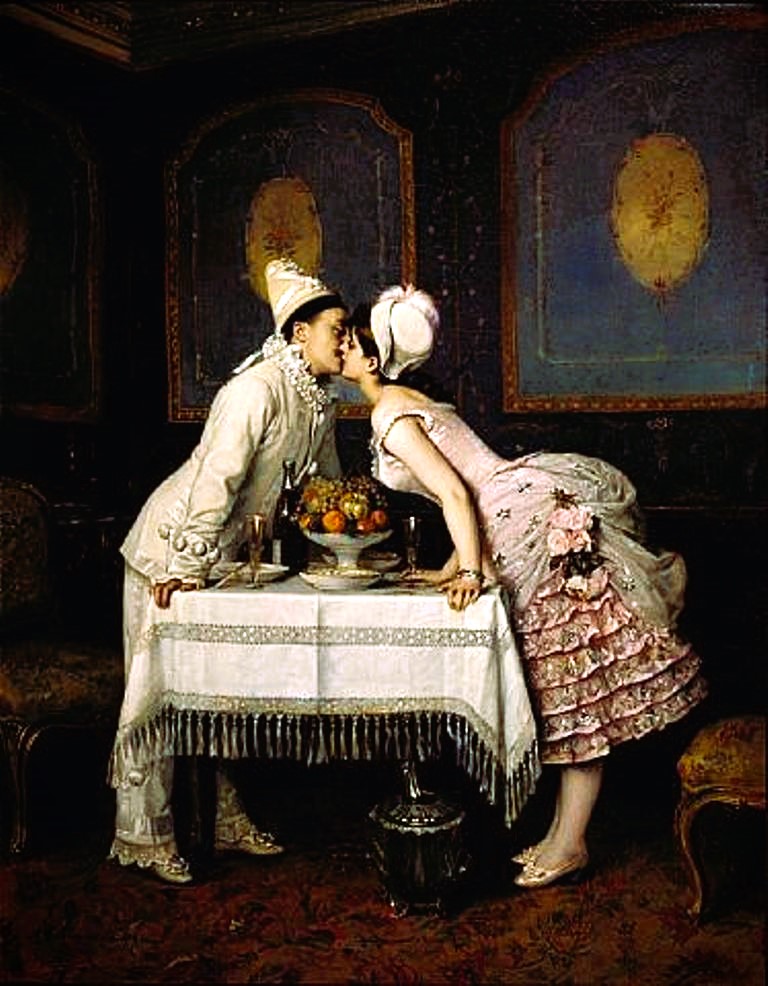
Steel went to Carrie and gave her a kiss as well. The pastor was envious because it was long and deep, and he began to worry if his little experiment would backfire. “That’s enough,” he said. “Well, Carrie. Whose kiss moved you more? Whose kiss made your loins shiver?”
Carrie stood and put her hands in the air, palms out. “This is all too weird. You are putting too much pressure on me. Love cannot be forced. I won’t allow it to be forced upon me like this. You both need your heads examined. I’m going to my room to be alone. Good day to you both.”
The men watched as Carrie disappeared up the stairs. They looked at each other. Pastor Snikk sneered. “Good job. You drove her away.”
“Me?” Steel said. “You’re the one being all weird with your twisted kissing game. Do you even realize how bizarre you are acting?”
“I’m merely acting upon the will of my Lord.”
“Bullshit. You’re acting upon the will of your old, crunchy balls.”
Mother Melba shot up from her place of meekness. “Out!” she yelled. “I’ve had enough of this god damn bickering!” She suddenly clamped both of her hands over her mouth. “Oh dear,” she said. “Do you see what you two have done to me!? I’ve taken the Lord’s name in vain.” She went to one of the portraits of Jesus on the wall and her sorrowful eyes fell upon the image. She petted his face with her fingertips and spoke softly. “I’m so sorry, Jesus. Please forgive me. I’ll eat a bar of soap if it is what you wish of me.”
Steel threw his hands up in the air. “I’m out of here. Thanks for one of the weirdest days of my life!”
Once he was out the front door and down the walk, Pastor Stikk went to Mother Melba who was still stuck to the wall and whimpering to her framed Savior. He cleared his throat to gain her attention. “Melba? Are you all right, dear?”
Her eyes slid slowly to gaze upon his face. “I think I may have a broken soul, pastor. For the first time in my life, I seriously fear Hell.”
“Come now, Melba. It was a simple slip of the tongue. Don’t be so hard on yourself,” the pastor said.
She wet her lips and moaned oddly. “A slip of the tongue?”
“A mistake. No one’s perfect.”
“Would you mind helping me up to my bedroom? I think I need to lie down for a while.”
The pastor nodded and put an arm around her. He held her like that all the way upstairs and into her room. She sat down on the edge of the bed. “Close the door,” she said. She patted the soft place beside her. “Come sit with me.”
Pastor Stikk moved toward the bed and sat down beside her.
“I haven’t been with a man in a very, very long time,” she confessed.
“There’s no sin in that, Melba,” he said. “Purity is often a blessing.”
She slid a hand onto his thigh. “Perhaps, but would you be willing to remind me what it’s like?”
“Melba. I think your emotions are overwhelming you now. I don’t believe you are thinking straight… And besides, I love Carrie. She’s in the very next room. I could never…”
“I just need you to fill the gaping emptiness inside me. Just for a little while.” She stood and began to undress.
The pastor’s eyes danced upon the morbid vision of her unshapely body. He had a sickness in his head and so slowly reached out a hand to touch her. She slid back onto the bed, and he smoothly followed after.