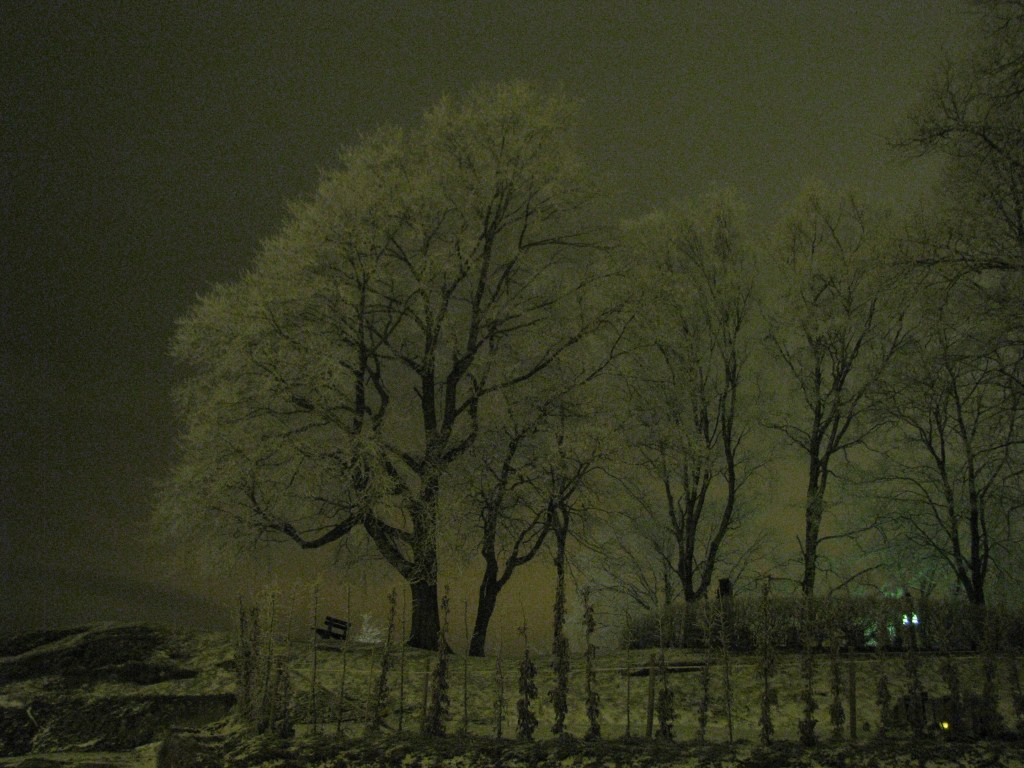
Month: June 2022

  • Bucky the Horse and the Gods of Radiation (3)

    The air was dead still and full of natural carnage. Papa shielded his eyes from the strange bright light with a worn hand. He moved his head against the horizon and surveyed the landscape — everything was wiped clean. He turned and yelled down the cellar.

    “The barn is gone, and all my new fencing, too.”

    “Can I come up?” Linnifrid called out from beyond a veil of invisibility.

    “Yes.”

    The girl poked her head up into the light. “Oh my, such destruction. Do you think Bucky is all right?”

    He answered her without looking at her, his eyes still glued to the land. “Oh yeah. He’s all right. Animals have a sense about these things. Though… I can’t say he’s anywhere near now. I’m afraid you’ll just have to let nature takes its course.”

    Linnifrid stepped completely out of the cellar entrance and stood toe-to-toe with her Pa and looked up into his steel-colored eyes. “Are you saying what I think you’re saying? You expect me to just let him go like that?”

    “Be realistic, girl. That horse is probably miles from here now. And look at this place. I’m afraid there’s too much work to be done around here and I need your help. He may find his way back.”

    “Sometimes you can be a cruel man,” Linnifrid steamed.

    “Watch that now, girl. You’re not too old for a whipping.”

    “Go ahead and whip me then. But it will have to wait until I get back from looking for Bucky!”

    Linnifrid stomped off in the direction of an unrecognizable horizon and Papa called after her. “Now what do you think you’re doing, young lady?”

    She turned and pouted. “I’m going to look for my horse.”

    The man who felt old sighed. “Hold on. I won’t let you go alone. But we’re not going to spend all day doing this.”

    Linnifrid brightened. “Thank you, Papa. Where do you think we should look first?”

    The man scratched at his head and looked off into the distance. “We may be right to try down at the pub by the lake first. You know how that horse likes to drink.”

    “That’s a good idea, Papa, but which way?”

    Papa scanned the horizon, looked back at the house, and then his eyes moved to the never ever lands again. He pointed a shaky finger out into the air. “That way,” he said.


    Bucky saw that the pub inside was dim and quiet as he nudged the door open and stepped inside. “Hello? Is anyone here?”

    There was nothing at first, but then a cat jumped up onto the bar with a screech, startling Bucky a bit. “Hello there, Mr. cat,” Bucky said as he drew closer. “What are you doing in here?”

    The cat’s eyes glowed wide as it studied the looming animal before him. “What do you want?” the cat hissed.

    “To tell you the truth, I could really use a drink. Do you think you could pour me a beer or two or sixteen?”

    The cat grinned. “Well, I’m no bartender, but I suppose I could try.” The cat got up on its back two legs and pulled down a mug from a rack above him. “This big enough?” the cat asked.

    Bucky shook his head in approval.

    “What kind of ale do you want?” The cat asked him.

    “What kind do you have?”

    The cat scanned the bar. “I don’t know. I can’t read. But there’s a white one, a blue one, and a red one.

    Bucky thought about it for a moment. “Red,” he squarely said. “I’ll have the red one.”

    “Ok,” the cat grinned, and it strategically worked a paw to pull on the red handle. Out came the beer, missing the glass and running onto the floor. “Damn it,” the cat said. “I’m just not coordinated enough to get it in the glass.”

    Bucky leaned his head over the bar and looked around. “I have an idea,” he said. “Yank the tap handles and let the beer spill all over the floor. I’ll just lap it up.”

    “That’s pretty smart, horse,” the cat said, grinning some more, and then he pulled the handles and the beer began to flow like a river all over the back of the bar. Bucky smiled, came around the corner and started drinking at the growing pool of ale.

    “I’m getting in on that action,” the cat purred, and then it jumped down into the beer pond and began to move its tongue furiously until its fur began to swell.

    After the horse and the cat got nice and drunk, they went outside and rested in a field of grass. The yellow of the sky was somewhat fading and there were now growing patches of pale blue. The cat looked up, and then over at Bucky. “Hey, horse. Are you married?”

    Bucky sighed. “Don’t be ridiculous. How can a horse get married? Are you married?”

    “Well, no. I’m not married. I just thought that with you being such a fine looking horse you’d surely have a wife.”

    “I don’t have a wife. But I have met up with a lot of female horses, and well, provided services, if you know what I mean.”

    “Huh? You mean you have a lot of girlfriends?”

    “Yes. Something like that,” Bucky boasted.

    The cat scratched at its head with a wet paw. “Then you’re sort of like a polygamist.”

    “A poly –ga-what?”

    “A polygamist.”

    “What the hell does that mean?” Bucky wanted to know.

    “You know, those guys who take on a handful of wives. They live in the desert, I think.”

    Bucky scrunched his face and blinked in the emerging sunlight. “I’ve never heard of such a thing. It sounds illegal.”

    “I’m just saying. Your life is sort of like that.”

    “It isn’t anything like that. Maybe you should just stop talking for a while.” Then Bucky tried to change the subject. “Did you know that tree over there is stuffed full of money?”

    The cat’s eyes widened. “Really? How do you know?”

    “The tree told me. He can talk.”

    The cat eyed the horse suspiciously. “You’re drunk and full of shit. Trees can’t talk, even I know that.”

    “Well, he talked to me. Just before I went into the pub.”

    “Oh yeah? Then prove it.”

    “All right, foolish cat. It’s right over there.”

    The two got up from their spots on the grass, crossed a wide gravel road to the other side, and went down along the very edge of the wooded wild lands until they reached the tree.

    “Well,” Bucky beamed. “There it is.”

    The cat went to the base of the tree and sniffed. It slowly circled the tree and looked it up and down. “It’s just a tree, you damn fool.”

    “No, no. He can talk. He can really talk!”

    Bucky moved closer and butted his nose against the spot on the trunk where the face used to be. “Hello?” he mumbled. “Mr. Tree. Are you in there?”

    The cat shook his head at him as if he were a complete fool. “Have you ever had brain surgery?”

    Bucky turned to him. “No. My brain is perfectly fine. Perhaps it’s the wrong tree.”

    The horse carefully examined the tree all the way around. Then he saw all the carvings and was relieved to know that he wasn’t that crazy. “Ah hah,” Bucky said. “See these? These are the exact same carvings the tree had me take a look at. The exact same ones! See, I was right.”

    “But the tree still isn’t talking,” the cat said with a shifty snark.

    “Maybe he’s sleeping. He’s an old tree, he’s probably tired.”

    “And where’s all this money?” the cat asked.

    Bucky moved his eyes up through the wayward branches, but no matter how hard he looked he could not see the opening that used to be there, the opening where all that money was. “It was here. I swear it was here.”

    The cat seemed disappointed and started to walk away. Bucky called after him. “Wait. Where are you going?”

    “I’m going to suck up some more suds from the floor of that dirty pub. I have a great life. See you around, horse.”

    Bucky watched as the cat wandered off and then it disappeared beyond the door of the bar. He felt sad and puzzled and somewhat tricked. He worked to try to make his mind make some sense of it, but no matter how hard he tried, his head was all fuzzy.

    “I’m getting old,” Bucky said to himself and the empty space around him. “There’s no more use for a horse like me in this world anymore.” He looked straight into the wind and wiggled his ears. Then he walked off and went through the curtain leading to the wild woodlands and vanished.

    TO BE CONTINUED


  • Bucky the Horse and the Gods of Radiation (2)

    Bucky carefully stepped out of a low hollow in a meadow and looked around. His glossy brown eyes surveyed the land, and he was crushed to see all the damage. He sniffed the air and it smelled like old metal in dampness. With everything so flattened, his sense of direction was out of whack — then he remembered the old pub by the lake, and he started out in that direction, as best as he could guess, hoping the place was still in one piece.

    He trotted on slowly and carefully and the world seemed entirely vacant. There was a subtle settling of dirt and dust in the air and it made the horse sneeze a few times. Bucky saw no other signs of life except for a few wayward birds with no real understanding of what happened below. He was hoping for some sort of neon miracle on the horizon, and it was a long time before he came to a narrow crest and looked down upon the lake — a haphazard shape of utter confusion and jaggedness.

    The pub was still there at the southern end and so Bucky picked up the gravel road below and followed it. Everything was eerily still and the air was the color of diluted pollution. As the horse drew nearer to the pub, he noticed there was a dirty beat-up old car resting out front. He went up from behind to see if he could detect a body inside behind the wheel. Someone was in there, but because the light was so askew Bucky couldn’t make out much except that it seemed to be a man. He carefully stepped to the front of the car and peered in through the cracked windshield. Whoever it was sitting there in the car, they weren’t alive, Bucky could tell that much.

    The horse looked around and then poked the tip of his nose inside the driver-side window and sniffed at the figure. He nudged the man but of course there was no movement. Bucky looked over the rest of the car and noticed there was a lot of trash — mostly fast-food bags and beer bottles. The ashtray in the dash was overflowing with cigarette butts and there was a pile of dirty clothes in the passenger seat. Bucky pulled his head out because the smell was just getting to be too much.

    “Gross,” Bucky said aloud, and then some birds above him in a tree squawked in agreement. “People can be so disgusting at times,” the horse said to an old tree standing in the hay beside the road.

    “They sure as hell are,” the tree replied with a sarcastic sneer. “You’re lucky though, you can at least walk away if they start getting on your nerves. I’m stuck right here, forever, and I got to listen to all their bullshit talk all the time. Especially on Saturday nights when they come pouring out of the pub right there all drunk and obnoxious. Hey, horse. Come around here and look at my backside.”

    “What?” Bucky said, puzzled as puzzled as a horse can be. “You want me to look at your… ass?”

    “I don’t mind tree huggers, but I draw the line at ass lookers… No, you dumb horse, take a gander at how much I’ve gotten carved up over the years. I imagine there are a ton of goofy love hearts and chick’s names back there, but I can’t really see so you have to tell me.”

    Bucky went around to the rear of the tree and looked at the bark. It was covered as high as a human could reach down to the base with symbols of foolish love. “Does it hurt when they carve on you?”

    “No, it feels great! What do you think?”

    Bucky swept his eyes over the carvings one more time. “I suppose it’s something like getting tattooed, right?”

    “How the hell would I know,” the tree whined.

    “You’re not a very nice tree. In fact I think you are quite crabby. You wouldn’t happen to be a crabapple tree, would you?”

    “A crabapple tree? That’s ridiculous and I am somewhat offended by that. I happen to be an Amur corktree.”

    “I never heard of that kind of tree. It sounds made up,” Bucky said.

    “Well,” the tree stammered. “What do you know? You’re just a horse. How could you possibly know anything about trees? If I was a bucket of oats perhaps, then maybe you’d be able to offer some intelligence to this conversation.”

    Bucky turned his head and looked over at the pub. “I’m going for a beer,” he said to the tree. “I’ll try not to bother you on my way out.”

    “Wait!” the tree demanded. “Aren’t you a bit curious about the dead man in the car?”

    Bucky had started walking but then stopped. His ears pricked up and he turned his head. “What do you know about him?” the horse asked. “Did you do something to this poor old soul?”

    “No! Of course not. How could I possibly kill a human being? I’m a tree for crying out loud. I can’t even walk. Can’t you see I’m attached to the ground, permanently?”

    Bucky found his argument to be logical and so he scratched him off the list of possible suspects that he had started in his brain. “I suppose you’re right about that. Well, then it must have been one of the bar patrons. Maybe there was a fight inside? They came out and the fight continued and one of the fellows pulled a bowie knife and stabbed the other in the guts. Am I right?”

    “No, you are not right. In fact you’re way off. It wasn’t an act of animalistic violence. Did you see any wounds on the body of the deceased?”

    Bucky thought about it. “No. I didn’t see anything but his lousy gray face.”

    “And what makes you so sure he didn’t just die of natural causes? Why do you mammals always assume death is caused by violence? There are many, many other ways a mammal could die.”

    Bucky bowed his head and scraped at the ground, feeling somewhat embarrassed by his inability to keep up with the tree’s powerful wisdom. “I didn’t think of that,” the horse grumbled. “But what makes you so special that you think you know everything?”


    The tree’s branches creaked as he spread them out like arms in a manner of instruction. “Mr. Horse, how long do you expect to live?”

    “What?”

    “How long do you expect to live?”

    “I… I don’t know. I’ve never really thought about it.”

    “Then I’ll tell you… You’re going to only live about thirty years.”

    Bucky’s cocoa bar colored eyes widened at the sound of that. “What? Only thirty years? Well… That’s terrible and I think you are wrong. You’re making it all up to frighten me.”

    The tree folded his branches in front of his trunk and sneered at the dumb horse. “I’m afraid I am very correct, my dear horse friend. Don’t get too excited about the future because you won’t have much of one. On the other hand, I can expect to live up to 100 years, that’s a century.”

    Bucky squinted his eyes and squished his brain as he thought up something clever to say. “At least during my lifetime I can walk around and go different places. I can see the whole damn world if I want to. You’re just stuck in the same place, day after day after day. You can’t go anywhere, and you have to look at the same damn scenery every day. I tell you what; if I was a tree I’d shoot myself in the face.”

    “Be careful what you wish for, dear horse. A bullet may be the end of you yet.”

    “Oh what the hell do you know? You’re just a crazy old tree. You’ve been sitting in the same spot for so long that you’ve lost your mind.”

    The tree twirled his twig tips against each other and grinned. “Maybe I’m a bit insane that is true, but at least I don’t have to worry about dying at thirty years of age.”

    “Shut up!” Bucky snorted. “I don’t want to talk to you anymore.”

    “But wait! I still haven’t told you what happened to the dead man.”

    Bucky huffed and glanced back at the tree again. “So hurry up and tell me. What happened to him?”

    “I bored him to death.”

    “What are you talking about?”

    “He came to get a drink here at the pub, just like you, but he never made it inside. I kept talking and talking to him and I just wouldn’t allow him to depart. Oh yes he tried, but seeing that most mammals have a hard time saying no, he felt obligated to stick around and listen to me. He eventually grew tired and sat down in his car but I managed to draw his attention for several more hours, well into the evening and even to the crack of dawn. When the morning fog lifted a bit, I could see he was slumped over and not moving at all.”

    Bucky motor-boated his mouth. “You’re being ridiculous. He probably had a heart attack. And why would you even admit, and even seem proud, that you bored someone to death? Don’t you have any self-esteem?”

    The tree stroked at his face bark with his twig tips and felt stumped. (Do you get it? Stumped. You know, because he’s a tree). “I have plenty of time to build my self-esteem,” he gloated.

    Bucky drew as close to the tree as he could and spoke into his face. “But what if someone comes and cuts you down? I suspect you’re a non-native species, and you know what that means, right?”

    “What!? What does it mean?”

    “It means they’re going to try to… Eradicate you.”

    “No! They can’t do that! I’m a very important and beautiful tree!”

    “I bet whoever does do the deed will use a nasty old chainsaw … Bzzzzz … Right through your guts.”

    “Stop it, horse! I demand you stop speaking to me like this!”

    Bucky shook his head at the tree and grinned before turning away and walking down the path toward the front door of the pub.

    “Hold on now, horse!” the tree yelled out. “How do you expect to get a beer if there’s no bartender?”

    Bucky turned to look at the dead man in the car.

    “That’s right, horse. There isn’t anyone to pour a drink for you,” the tree teased. “You have hooves. You’re screwed!”

    “I also have a brain. I’m sure I’ll be able to figure something out.”

    “Oh really?” the tree sneered. “I’ll bet you one million dollars that you can’t pour your own ale.”

    “And where in the world would you get one million dollars?”

    “Can I tell you a secret?”

    “Yes?”

    “Come closer. That’s good. So the secret is… Many, many years ago, a farmer who lived just up over that hill, well, he came right to me and he climbed up a ways on me, and you know what he did?”

    “What?”

    “Well, see that opening a bit of a ways up my trunk?”

    Bucky looked and he saw a wide crack in the tree that looked like a sideways mouth worn by time. “Yes.”

    “The farmer put a sack of money in there, and over the years he came every so often and put more and more money in there. One day he just stopped coming. He hasn’t been here in a very long time and no one else ever went up there to retrieve the money. It’s still there. Lots of it.”

    Bucky scrunched his face in disbelief. “I have no need for money, tree. Just forget about your stupid bet.”

    “You think I’m lying?”

    “Of course you are. Everyone is a liar. Everyone is a back-stabbing liar!”

    “Fine, suit yourself. Go fetch your beer and leave me alone. I have no need for a grumbling horse in my life.”

    TO BE CONTINUED


    ENTER YOUR EMAIL BELOW TO FOLLOW CEREAL AFTER SEX AND RECEIVE UPDATES. THANKS FOR SUPPORTING INDEPENDENT WRITERS.

  • Bucky the Horse and the Gods of Radiation (1)

    At the end of gravity, only the heartless still eat and smile and roll around in the dirty motel cities of the West…

    The dystopian nature of her guts made Linnifrid’s mouth taste like the moon. She looked up at it now as she sat on a grassy knob in some wayward rolling meadow of what used to be western Missouri. She was alone but smart, and the world was wired and dumb. She figured there just had to be a way back to her own time — maybe somewhere sweet and sunny and tame where she could really live the life she had always wanted — somewhere where she didn’t feel as if she had to erase her own birth.

    She drank from a small milk pitcher and watched the stars hurl themselves against the great ghostly apron light of the moon. Linnifrid heard her horse dig in the grass behind her and then he breathed out hard with a great rush and she knew he was somewhat scared. She was scared too — for in the distance the great metallic glows from the bombs dropping across the land lurched upward like grain silos on fire and the ribbons of sparkles casually fell back down to Earth to burn the walking and send them to wake.

    The horse’s name was Bucky and he was a big milky brown horse without a saddle. Linnifrid stood and went over to him. She ran a backward hand across the long face and she thought the horse’s chocolate eyes looked sad beneath the blazing sky. “What’s the matter, boy? Those damn bombs scaring you again?”

    Bucky nodded his head in agreement. “They sure are,” he said in perfect English speak.

    Linnifrid stumbled backward, startled by the oh so human voice emanating from Bucky’s horse mouth. “Did you just talk?” she asked in a crystalline dazed wonder.

    Bucky shook his head no and looked away as if he were trying to hide some deep embarrassing secret.

    “Look at me when I talk to you,” Linnifrid demanded, and she touched his head and pulled his eyes to face her. “Is this some kind of nasty trick?” she wanted to know.

    Shyly, the horse looked at her. “No. I’ve always been able to talk. I just didn’t want you to know about it.”

    “Why not? It’s an amazing talent.”

    “I was afraid you would sell me out for your own selfish gain.”

    “Bucky. I would never ever do that. We’re best friends for life.”

    “But …” Bucky struggled to find the right words. “What if you were riding me and you fell off and hit your head against a rock and died?”

    “Bucky! That’s a terrible thing to say. Why would you say something like that?”

    “I suppose because I’m just a paranoid realist,” the horse answered, his head down and his horse heart feeling a tad melancholy.

    Linnifrid softly smiled and then wrapped her arms around the horse’s strong neck. “Don’t be silly, Bucky. You’re just a deep thinker. That’s all. I always knew you were a very smart horse.”

    Bucky looked up and smiled at her as any animal would if they could. “Thank you. I always thought you were a very smart girl.”

    There was a sudden deep shattering blast in the near distance and Bucky reared and hollered. Linnifrid tried to calm him but the horse was too frightened and he bolted away into the deepening darkness.

    “Bucky!” Linnifrid cried out. “Bucky, don’t leave me here all alone!”

    Linnifrid started walking toward the small farm village where she lived when she could. When the raids came they had to leave and hide in the forests beyond. Tonight it was safe. They were all busy with the bombing. The air Linnifrid walked through was still warm even though it was January, and the ground was soft from the snow that so quickly melts. She walked tenderly through the crushed meadows, one after another, a patchwork quilt of starving green. She would stop once in a while and listen to see if she could hear Bucky chomping in the fields. Then she would walk again – toward the small huddle of dim twinkles cradled nicely where the land sloped down and spread out a bit. When she reached the last crest, she scanned the moonlit moors of America for any shadowy signs of her beloved Bucky. There was nothing.

    The house was meager and Linnifrid went straight to her room of red ambiance and opened up the window. It made the room cool but Linnifrid didn’t mind the chill. She was a thick-skinned girl of healthy farm girth, nearly 17, and her hair was long and straight and the color of writing ink. She sat on the sill of the window and gently scratched at her pale face. “Where are you, Bucky? Please come home,” she whispered to the night air. A spooky rush of wind lapped at the house. She shivered, closed the window, and crawled into her bed. The door slowly creaked open and in stepped Linnifrid’s father. He went to the edge of the bed and looked down at her, his face worn much too weak for a man of 51. He shook her leg. “Linnifrid,” he whispered. “Are you asleep?”

    She widened her eyes and looked at him. “No Papa, I’m finding it difficult to rest.”

    “Is something wrong?”

    “Bucky ran away. There was a blast in the far meadow and he spooked.”

    The man ran his fingers through the roughed up head of hair the color of bleeding rust. “I’m sorry to hear that, darling. There’s nothing we can do about it tonight, though. It’s late and the patrols are out. You’ll have to wait till morning.”

    “Will you help me look?” Linnifrid urged her papa.

    He scratched at his head and thought about it, but in a way that she could tell he was actually thinking about something far deeper. “I tell you what. We’ll help each other out with our chores and then we can go look for Bucky. Will that be all right?”

    “Yes, Papa. Thank you.”

    He struggled to smile and turned toward the door. “I’ll meet you downstairs promptly at six for breakfast,” he said on his way out of the room. “Goodnight. I love you.”

    “Goodnight, Papa. I love you too… Wait, Papa?”

    He turned back to her. “Yes?”

    “Why is the world such a messed up place?”

    He paused and thought. “Because love isn’t the most important thing anymore.”


    Linnifrid stood at the stove and fried him eggs and bacon while he sat at the table sipping coffee. “I sure do hope Bucky is okay,” Linnifrid said over her shoulder. “Just look at that frightful weather out there.”

    “He’ll be fine… It’s just supposed to rain some.”

    She put out his food on a white plate and brought it to him at the table.

    “Thank you, dear. You’ve always been able to make a wonderful eggs and bacon breakfast… But aren’t you having any?”

    “No, Papa. I’m too upset to eat anything… I could make you some griddle cakes if you think you’ll still be hungry.”

    “No. That’s all right.” Papa grunted and looked around the room, annoyed by something that was maybe or maybe not really there. “I miss the damn newspaper,” he said. “Nothing is the same anymore.”

    “Do you miss mother?”

    Papa wiped a napkin across his scratchy face and looked right into her eyes. “Of course I do. My heart hasn’t been the same since…”

    “I know, Papa. I miss her too.”

    “Did you hear the owls last night?” he randomly asked her.

    “I love the sound of owls.”

    “Owls are peaceful creatures,” Papa said. “The world needs more peaceful creatures.”

    “Yes Papa,” she slowly replied, for now her head was twisting toward the window and the through the glass she saw one of the manufactured tornadoes ripping across the landscape on a direct path to the village. “Papa!” she screamed. “It’s a twister!”

    Papa leapt from his place at the table and dashed to the window. “God damn! It’s a big one! We need to get to the cellar right now.”

    “But Papa” the girl pleaded. “What about Bucky!? He’ll die out there.”

    “Girl, this isn’t the time to be chasing down a wayward horse. We got to get to the cellar… Now!” He grabbed her by the arm and pulled her outside. The tornado was spewing dust and debris all around them as they made their way to the safe haven below ground. Papa pulled the doors open and ordered Linnifrid down the stone steps. He followed behind her and latched the doors tight from the inside but they still furiously rattled as the storm bore down. The girl had found the lamp and turned it on — the light casting a pale blue hue against the gray of the cellar. Papa squatted down on the stairs and listened to the havoc now stirring right above. “They’re trying to kill us again… Those bastards!” he cried out in fear and panic.

    Linnifrid looked at the riled man and was sad about that. He hadn’t always been so frustrated, she thought. He was once a very calm man; a man content with his pastoral life. “Come down from there, Papa,” the girl said. “It’s not safe so close to the doors.” He turned to her without a smile or a frown. “I think I may have some serious psychological problems,” he said, and he looked at her with troubled eyes. Linnifrid stepped forward and held the blue lamp in front of her so that she could see his long face. “Are you still taking your medication like the man at the medication store said to?” she wondered.

    Shakily he swallowed and said “Yes.”

    “Then maybe you need more.”

    “More pills? But I already take so many.”

    “The pills help cure all your problems. Don’t you listen to all the advertisements? Your druggist is your best friend.”

    Something fell across the cellar doors and the noise startled them both.

    “It’s coming good now,” Papa said, trembling and sweating in the dank of the insane moment.

    “Don’t try to change the subject, Papa. I think we need to take another trip to the medicine store.”

    “No! I don’t want any more medicine. It’s making things worse.”

    “Nonsense, Papa. They wouldn’t purposely give you something to make your condition worse. It’s a very proper industry. You just need to give it a chance to work.”

    “What is it girl? Why are you turning on me like this?”

    Another loud thump outside pricked at their nerves.

    “I’m not turning on you, Papa. I’m trying to help you but you’re being awful odd and stubborn about it.”

    He turned away from her and said nothing. He stood up and placed an ear close to the cellar doors to listen for the storm. “It’s quieted down out there. I’m going to go take a look. You stay here until I come get you.”

    Linnifrid stepped back and watched as her father pushed the doors open. A sudden burst of yellowish-brown light flooded the cellar. Softly she said, “Be careful, Papa.”

    TO BE CONTINUED


    SUBSCRIBE BELOW TO RECEIVE NOTIFICATIONS OF NEW POSTS FROM CEREAL AFTER SEX.

  • Albuquerque French Fries

    The mountains in Albuquerque are to the east. In most places I’ve lived, they were to the west. I always found that to be a bit strange, but maybe it’s not. But I was on the east side of Albuquerque, close to the mountains, when I was suddenly struck with an insatiable desire for French fries.

    I stopped at some chain diner place and ordered not one, but two baskets of French fries and something to drink, a Coke maybe, I can’t remember, it being such an odd and weird time in this life.

    I was in Albuquerque for no particular reason. I had been in some cheap corporate place of lodging the night before. I just remember staring out over the lights of the city; there had been a lot of blue, not amber so much, as I had expected — blue, desert lights — and I was hungry for action as I smoked cigarettes and drank bottled beer.

    It was a mighty funny feeling not really knowing why I was in Albuquerque at that particular time. I just wanted to get away from the doldrums of it all, back in some place suspiciously called HOME, but not really being home at all, but even so, there had been no action to be found after all. It was just a bunch of lazy driving through another American charade parade. Honking and Howitzers, springboard diving into hard cement, cold dreams, loneliness… the constant… loneliness… strumming the walls of white-walled malls, walking among the living dolls swinging handled bags of Chinese crap as they smiled those fake plastic smiles to the point the heavy makeup nearly cracked and fell to the ground — and me, up and down escalators, elevators, in and out of parking spaces from another dimension, and there was the smell and the sun and all the Native American motif fizzing like digging it science-fiction sabers… And then a bookstore, where I could breathe, meld into words and covers, fondling spines as I walked the rows among the ink bleeders and readers, wives with glasses, wives with hair pulled back into a tight tail, with the kind of head that you could palm like a tender melon as she let loose in your very own lap — the luxury of Saturn’s dew and doom—  loving it, living it, bent to it, stardust whispers scraping across the firmament like the cloud-studded smile of a stranger now wiping at her mouth with a scratchy, white motel towel, high-heeled remnants of lipstick-stained cigarette butts in some cheap amber ashtray on the bedside table, the one right next to the three-quarter drained bottle of voodoo juice purchased at some Nob Hill poison joint.

    And I ate those French fries slow and alone, looking out the bug greasy window at the traffic all piled up and trying desperately to move. All them peoples frantically working away their lives just to live for a couple days a week, a couple weeks a year — “you’re all fucking slaves to the system” I said to the fries and then I knew the batty waitress was going to call the cops on me, so I left her a nice big, fat tip and told her “I was never here, you didn’t see nothing,” and then I ran out the door and I started to drive again.

    I rattled around Q-Town, aimlessly, again, searching for meaning, searching for enlightenment so often talked about — where was it? I ended up near the Sunport. I just parked somewhere under the sun and just watched planes come and go, people come and go, everyone in such a damn hurry to get to nowhere, in such a hurry to just wait, to be strip searched, to be violated in a windowless room. It was hot, I rolled down the windows, I sucked on oil cans of Australian limeade, that’s Australian for lemonade, good drink, and I wondered, what’s Australian for Albuquerque? There were no super fresh and hip boomerangs or two-step your dead snakes lumbering along Indian School Road… And that’s where I almost bought a condominium, townhouse maybe, but it made me think too much of childhood and milk and that made me sad. I suppose, childhood’s end right out there tip-toeing on the double yellow line as mad dashers come whizzing by that do not mention your soul in those radio prayers bleeping forth from plush dash… Awe, money man and your senseless soul, look at the trees once in a while, get out of this neon cave and get lost for once in your fucking digitized life, smoke a little sky, eat a little dirt, breathe in the sun and let the sunflowers puke forth. Man, you are becoming machine. You are being eaten alive by throngs of numbers, nonsense, nocturnal Novocain in the batty cave.

    774 Central Refreshment House — more juice required. Cocoa Puffs and milk and Milky Way wayward hanging out by the sea of Sandia. Drunk on 233 Insomnia Street with some invisible chick named Glory, Glory Hollywood Boom Boom in a blue dress and tattooed bed sheets all covered in shiny pistols and white daisies. She wonders why I sit there, on the edge of the bed, shirtless, my back curved like a bell jar, staring out the window, the widow ghost traces my scars with cold fingertips, like a map of downtown Boston, they run down and all around, some mad parade of direction all haywire, I have some seizure via Heaven’s reach, she tries to calm me with something on fire, it’s getting yellow outside, there is maybe crying inside, but not out here, not where shit is real and man be cold, and the record needle digs into the vinyl and Native American mystic music comes pouring out like I was liquid in some wigwam in the parking lot of the neon green Gallup pharmacy where the witch doctors freeze you up before you take that freedom walk, that vision quest that leaves your eyes white and wide as you kick at dead America with the toe of your most trusted boot and simply look away.


    Enter your email address below to receive notifications of new posts from Cereal After Sex. Thanks for supporting independent publishing.

  • Have you heard of not being summer?

    Driving through hot ass western Wyoming approaching hot ass Utah with my hot ass wife in June 2021 / Aaron A. Cinder

    I was born in Wisconsin in the middle of winter. It was cold and the waters of Lake Michigan closest to the shore were frozen over. The trees were stripped bare of all they wear. The snow was dirty white and deep. Human breath roared forth like dragon spit down on the sidewalks.

    Winter is one of my happy places. I was literally born for it. Winter is cozy, fireplace warm, homeward bound for Christmas.

    I hate summer. Summer is a battle for me. I am like opposite bear and want to hibernate May through August – in a cave of ice, with a frosty mug of A and W root beer, my laptop, and really good internet service. What should we call that? How about Fantasy Land answers Thornton Melon (played by Rodney Dangerfield) from the 1986 comedy film Back to School.

    Technically, summer doesn’t even officially begin for about another week, but don’t tell that to Tennessee. Temperatures today are forecast to top out at 94 degrees with a heat index of 106.

    As the guy on Office Space would say: Yeah, if you could just not be so hot today, that would be great. Thanks.

    The bottom line is – I HATE HEAT. I hate to go outside in the summer. I don’t like to be hot. I don’t like to sweat. I don’t like to be uncomfortable beneath a blazing sun. I burn easily. I hate the bugs. I hate getting into my lava hot car and burning my palms on the steering wheel. Summer is not cozy. Summer is obnoxious. I spend most of summer indoors in the air conditioning and with fans roaring in our bedroom.

    Then why did you move to Tennessee? Someone might ask with a crooked face of wonder.

    Well, I do like some things hot. Like my wife. She’s the reason I live in Tennessee. So, I put up with the summers here, but still bitch about it. The other day I suggested to her that we get a summer home in Antarctica. She thought that was a bit much. Okay, how about Iceland? She was more receptive to that.

    Now, I’ve lived in other hot places – Colorado, New Mexico, South Carolina, West Texas, Missouri. Colorado was the most seasonally diverse. New Mexico (the southeastern part) boasted an unbearable desert heat that would thrust one into agonizing days on end of temperatures well above 100. South Carolina was a wet, heavy heat that made everything, and everyone drip. Texas was a dry, windy, wildfire-like slap in the face. Missouri was like, eh, Missouri – there were good days and there were bad days.

    I thought as I got older, I would become more adaptable to the heat, you know, on a purely biological level. I went into this current impending summer of doom hopeful that would be the case, but as the mercury climbs higher day by day, I’m like NOPE. It’s not working. I’m not built for it.

    Just the other day in a hopeful trance, I was talking to my wife about Thanksgiving. She looked at me like I was crazy. I think I must be. But I truly wish I could erase the summer months from the calendar. Come on Mother Nature, can’t we just extend autumn and winter a couple of months more each? Please. If only I had a light-duty time machine.

    On a societal level, summer is often portrayed as the fun time of the year. For example, people painfully smiling as they cruise in lipstick-red convertibles on their way to play with their balls at some beach in paradise – inflatable rainbow-colored beach balls are what I mean, but then again, I’m sure there are some weirdos who play with their balls at the beach. Okay, that was unnecessary but I’m going to leave it because Cereal After Sex is a playground for pushing the literary envelope off the swing. Literary? Maybe not always.

    But I’ve gotten off track. Where was I? Oh yeah, summer. I have no desire to jump up and down on a beach in my skimpy swimsuit slapping around a volleyball. (No one would want to see that anyways.) I don’t want to wear shower shoes or shlippy shloppies (what us folks from up north call flip flops) down by the pool. I’m not a swimmer. I’m an always on the verge of drowning kind of guy. Pools don’t impress me. I like to look at the ocean and listen to the ocean, but I don’t necessarily enjoy putting my body in it. I’d rather play in the icy waters of one of the Great Lakes before heading back to my woodsy cabin. With the ocean, I’m afraid of getting stung by a jellyfish or eaten by a shark or being swept away by a giant wave. Do you remember what happened to Greg Brady in Hawaii? But then again, he was probably high.


    Thanks for reading. If you like Cereal After Sex (and who doesn’t), consider signing up below to FOLLOW and get notifications of new posts. Thanks for supporting madness in story form.